

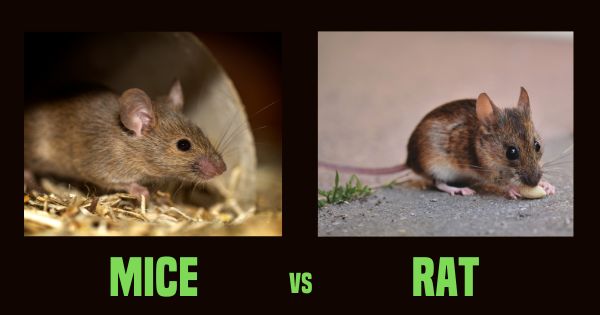
Rats and mice are both rodents that can infest your home causing property damage and spreading disease. Although they are similar in appearance, there are some distinct differences in both appearance and behavior. The most obvious difference between mice and rats is size. Rats can reach an adult size of nearly 16 inches from the tip of their nose to the tip of their tail while a full-grown mouse rarely grows larger than 7 to 8 inches in length. But there are more subtle differences as well.
Springfield & Kansas City, MO
Houses shift and new gaps open, so mice can find a way back in even after treatment. That is why our plan does not stop at the first visit — if a covered pest returns between scheduled visits, we re-service at no additional charge.
Book a free inspection. We’ll find where they are getting in and get you a plan quote right over the phone. No charge, no obligation.
Near you: Pest control cost in Springfield, MO · Pest control cost in Kansas City, MO

Near Springfield or Kansas City? Pest control in Springfield, MO · Kansas City pest control
One of the distinguishing features of mice is a pointed face and large ears giving it a friendly appearance. Mice are often depicted in fairy tales and storybooks as endearing creatures while rats are often seen as evil or foreboding. A rat’s head or face is more blunted and the ears are much smaller.
Mice have a long, thin tail that is covered with fur or hair, while a rat has a shorter, thicker tail that is bare or covered with scales. A mouse’s tail is longer than its head and body, while a rat’s tail is shorter than its head and body.
Mice may be brown, white, or gray while rats can be white, brown, gray, or black. The color of the rat or mouse depends on its species.
When you don’t catch a rodent in the act, droppings are usually the fastest way to know which one you’re dealing with. Mouse droppings are small – about the size of a grain of rice, with pointed ends – and scattered widely since mice explore more freely. Rat droppings are larger, closer to the size of an olive pit, with blunt, rounded ends, and tend to cluster in a few consistent spots near their nest or travel paths.
Most infestations we see in Springfield and Kansas City homes come down to a short list of species:
House mice: the most common indoor invader, small and adaptable to almost any part of a home.
Deer mice: found more often in outbuildings, garages, and homes near wooded or rural areas – also the species most linked to hantavirus.
Norway rats (brown rats): larger, burrowing rats usually found at ground level – basements, crawl spaces, and near foundations.
Roof rats (black rats): strong climbers that favor attics, upper walls, and tree-adjacent rooflines.
The species matters for treatment, too – a Norway rat problem calls for ground-level exclusion work, while a roof rat problem means checking the roofline and attic access points instead.
Both mice and rats are nocturnal critters that tend to stay out of sight during the day and come out to find food at night, but mice are more daring than rats. Mice are social animals and like to explore, while rats are more cautious of sources of danger.
Mice are excellent climbers and can scurry up the inside of your walls to reach the attic where they often chew on insulation to make nests. Rats can climb too, but they are more inclined to stay in the basement or in crawl spaces.
Mice and rats behave differently, but both look for easy access to food, water, and shelter. Knowing what attracts rats to a property can help you prevent repeat rodent problems.
An occasional mouse or rat that wanders into the house when it gets cold outside doesn’t cause for immediate alarm, but you may be in for serious problems if you don’t get rid of it right away. Mice and rats are rapid breeders, with mice breeding much faster than rats. A mouse is able to breed at 8 to 12 weeks and can produce 7 or 8 litters of 4 to 16 babies in each litter a year. One breeding mouse can produce well over 100 mice in five months if you don’t get rid of it right away. Rats reproduce at a slower rate, but one or two rats can balloon into many in a short time.
Both mice and rats carry diseases that can be spread throughout your home. Because they dribble urine and feces behind them wherever they go, they spread disease-causing bacteria and viruses too. Mice and rats can contaminate food surfaces, get into your food, and even spread disease through nesting material.
Mice and rats destroy property by chewing through insulation and electrical wires and can pose a risk of fires. They also seek out nesting material and may enter closets, dresser drawers, or boxes of stored clothing and gnaw it to shreds to make nests. While mice are generally limited to light materials, like fabric, cardboard, and paper, rats can do quick damage to nearly anything in their path. Their front teeth never stop growing, so gnawing is constant — including through soft or weakened concrete, drywall, and PVC piping.
They also leave behind an offensive odor that can be difficult to get rid of.
Traps are effective if you catch the problem early. There are many styles available from no-kill traps to snap traps that kill the rodent when it stops for the bait. You can also use mouse and rat bait. But beware because mouse and rat bait are poisons and are harmful to small children and pets. Read the label carefully before using any kind of mouse or rat bait.
Some keep a cat known as a mouser to keep the mice at bay in their home. This can be effective for catching mice that come in from the cold in the fall but isn’t likely an effective solution if you have a large mouse or rat population sharing your home.
A mouse or rat infestation may require the work of an exterminator to get them under control. An exterminator has the equipment and expertise to track down mice and rats and treat them. He will also identify entry points to your home and either seal them for you or provide you with tips on how to prevent mice and rats from entering your home in the future. Because mice and rats often require different treatment approaches, pricing may vary; review this guide to rodent exterminator cost.
A single mouse that wandered in with the cold weather, caught early with snap traps and a sealed entry point, is often a DIY-solvable problem. What tips it into “call a professional” territory: multiple sightings in different rooms (suggesting an established population, not one animal), droppings you’re finding faster than you can clean them, or any sign of rats rather than mice — rat infestations are harder to fully clear with consumer traps alone because rats are trap-shy and learn to avoid them after one failed attempt. If you’re past the single-mouse stage, an inspection will tell you which situation you’re actually in before you spend money either way.

Don’t let rodents invade your home and compromise your peace of mind. At Titan Pest Pro, we offer complete rodent pest control services tailored to your specific needs. Our expert team uses effective, label-directed methods to eliminate rodents and prevent future infestations. Protect your property and ensure a healthy living environment by choosing our reliable and professional rodent control solutions. Contact Titan Pest Pro today for a free consultation and take the first step towards a rodent-free home.